

Leather Ottoman Repair + Color Change: From Rustic & Worn to Modern & Clean
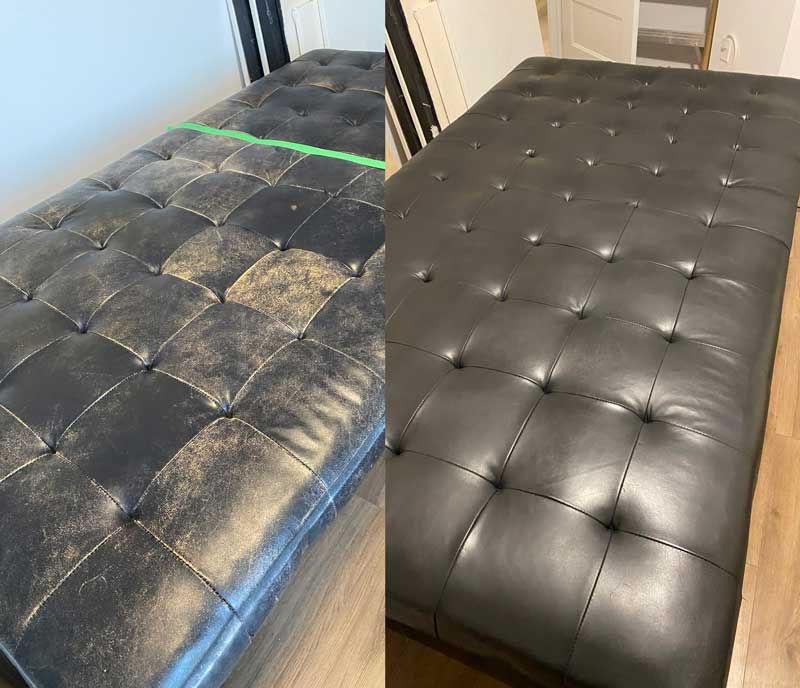
Sometimes a piece of furniture doesn’t need to be replaced — it just needs the right leather repair and restoration. This project is a perfect example: our client had a leather coffee table/ottoman with a small tear, heavy wear, and an overall rustic, faded look. They wanted two things:
Repair the damage so it looks seamless again
Change the color to a more modern, updated finish
The result: a refreshed ottoman that looks cleaner, darker, and far more contemporary — without the cost (or hassle) of buying new furniture.
The problem: tear + worn finish + outdated color
On the “before” side, the leather showed:
Visible wear and discoloration across high-contact areas
A small tear that could worsen over time
A finish that looked tired and uneven (more rustic than modern)
This is very common with leather ottomans and coffee tables because they get daily use: feet, trays, shifting weight, and frequent cleaning with the wrong products can speed up finish breakdown.
What the client wanted
The goal wasn’t just a patch job. The client specifically asked to:
Fix the tear properly (not a quick surface cover-up)
Recolor the entire piece for a uniform look
Make it feel more modern and less rustic
That meant the repair had to blend perfectly and the color change had to look intentional and factory-clean.
Our process: leather repair + recoloring + protective finish
1) Deep cleaning + prep
For any leather recoloring job, prep is everything. We thoroughly cleaned and deglazed the surface to remove:
oils and body residue
old conditioners/silicones
dirt trapped in texture and seams
This is what helps new coatings bond properly and prevents peeling later.
2) Tear repair (reinforced, then leveled)
To repair the small tear, we:
stabilized the area so the tear wouldn’t spread
rebuilt and smoothed the damaged section so it sits level with the surrounding leather
The key is making the repair structurally sound and visually invisible before color goes on.
3) Color change (modern, even coverage)
Next came the transformation: a full leather color restoration and recolor to a darker, modern tone. We applied the color in controlled layers so the finish looked:
consistent across panels
clean around tufting and seams
natural (not thick or “painted-on”)
4) Topcoat protection
Finally, we sealed everything with a durable protective topcoat designed for furniture use. This helps with:
scuff resistance
easier cleaning
longer-lasting color and finish
The result: modern look, refreshed leather, and a piece that feels new again
After the repair and color change, the ottoman looks:
darker and more modern
smoother and more uniform
restored with a finish that makes the tufting and shape pop again
And most importantly: the tear is repaired in a way that blends into the overall restoration — not a distracting “spot fix.”
Why this kind of furniture restoration is worth it
If you’re thinking about tossing a worn leather ottoman, here’s why restoration often wins:
Costs less than replacement (especially for solid, well-built pieces)
Keeps the same comfort and structure you already like
Lets you change the style (color refresh can completely update a room)
More sustainable than buying new
Aftercare tips (to keep it looking fresh)
To maintain restored leather furniture:
Wipe weekly with a lightly damp microfiber cloth
Avoid harsh cleaners, alcohol, and silicone “shine” products
Keep away from direct heat/sun when possible
Clean spills fast (don’t let liquids sit in seams)


Comments